Written by Lauren Milne
Journalist and Literary Content Officer (Volunteer) | Poetry in Action
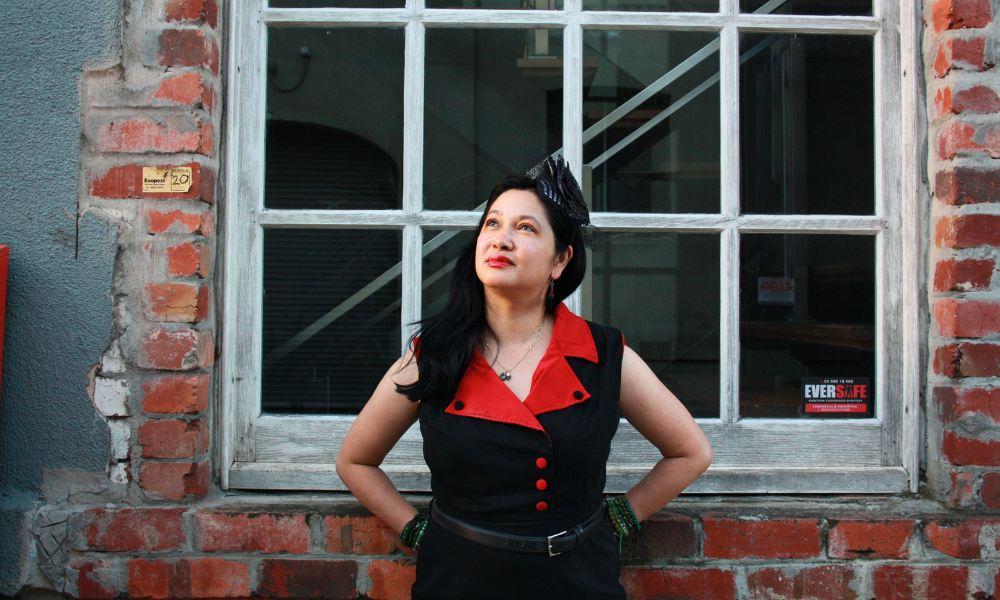
In this Thuy On poetry interview, Australian-Vietnamese poet Thuy On does not believe in suppressing powerful emotions in the hope they will simply vanish, as so many young people are told to do. Instead, poetry is her medium for navigating turbulent waters and coming up the other side for air, no matter how big the waves.
Are all great poets born great, or is greatness fostered within them?

Margaret Atwood, author of the award-winning novel The Handmaid’s Tale and several books of poetry, undoubtedly was born great. She famously wrote her first booklet of poetry at the astonishing age of 6. But, from a young age, her creativity was nurtured by two open minded parents. Her father, a zoologist, had the young Atwood and her family living in the Canadian wilderness until she was 12. Her free-spirited mother encouraged her and her older brother to explore the woods around their cabin. Here, her imagination was free to run wild, her mistakes allowed to be hers to own, her problems allowed to be hers to solve. Atwood was empowered, not undermined, by adults who gave her agency rather than limitations.
Margaret Atwood’s Early Influence
I heard these stories from Atwood herself when I watched her speak at the launch of her memoir in Manchester last year. Her wisdom, eccentricity and self-assuredness filled the entire theatre space, reaching each and every one of us in the audience like a mist with gentle fingers. She sat before us no longer aged 6 but 86, having grown from being a little girl with
dirt-caked hands stamping happily through the woods to becoming one of the greatest literary figures of the modern world.
How can we find the next generation of great poets? How can we nurture their creative talents alongside their confidence, resilience, independence, and problem-solving skills?
Why Young People Need Creative Expression
The youth of today are barraged with the rhetoric that they are untethered and in desperate need of regulation and discipline. Parents worry excessively about their children’s lack of focus and direction, their incessant use of social media, their vulnerability, emotionality, and lack of resilience. Sounds bleak, for the kids as much as for the parents. But even a single Poetry in Action performance is a rallying war cry that pierces through the barrage of criticism, demanding that we take a closer look at children and their immense potential instead of looking through them. Literature and poetry can bring colour back into their worlds, inspiring the greatness already within them to take on a more defined shape. Nothing awakens a young person more than the permission to be themselves, and this gift is easily given through teaching them to embrace their individuality and independence through creative expression.
Inspiring the Next Generation
For Thuy On, critically-acclaimed poet and Poetry in Action Ambassador, writing found her when she needed it most and shaped her into the resilient, successful and confident woman she is today. Writing is a beloved unravelling tool for the tangled yarn-ball of her emotions,
the flashlight that illuminates the dark attic of her desires, and the umbrella shielding her from being swallowed whole in weeping storm clouds of sadness. This year, Thuy, along with our other Ambassadors Alex Wharton and Eartha Davis, will be mentoring emerging school age poetry competition winners, supporting national engagement initiatives and helping strengthen pathways from arts education into professional creative careers for our brilliant young people.
Thuy On has recently joined Poetry in Action and is on the brink of releasing yet another fantastic book of poetry early next year, a collection called Insolence (2027). I had the pleasure of sitting down with her over the course of an hour.
A Conversation with Thuy On
As our interview starts, I’m already impressed. Even through Zoom, Thuy On has that air of a Tubrilliant, once-in-a-generation poet. She’s confident, authentic, rebellious, ambitious with a take-life-by-the-horns kind of energy. She’s exactly the kind of person I wish had walked into my high school and showed me how this whole “writer” thing was done.
Finding a Place in Poetry
However, like so many of our younger generations, and even some of our adults, the young Thuy On struggled to find her voice in school. “I was a quiet nerd in the corner who liked the library and didn’t really speak in class”, she tells me. I stare at her in disbelief. Though I’ve only known her for 15 minutes at this point, I tell her how much I cannot believe the woman in front of me had been shy or quiet in any way. “So you’d never written poetry while you were in high school?”, I ask. Weren’t all great writers like Atwood, with fully formed ideas and creative ambitions before even morphing into a self-indulgent tween?
Thuy becomes indignant, passionate, reflective: “You know…I feel sad about my own young adulthood, in a way. I had to figure the whole “writer” thing out all by myself. No one helped me. I didn’t have a teacher who said, hey, you show promise. Why don’t you forget about Maths and Science and do English Literature? Nobody recognised that I was just this lost child and I needed guidance”.
I nod my head in awe after such personal words. “Is this what draws you to Poetry in Action?” I say.
She nods back. The moment of shared vision between us has sparked. “I thought Poetry in Action might be a way to help…”
Why She Joined Poetry in Action
Thuy tells me that Poetry in Action gives a refreshing, and much needed, relevance to poetry again for young people. “I’m a firm believer, Lauren, of trying to take the poetry out of the page and into a different arena”, Thuy says to me. I’m captivated by her originality, her ability to think outside the box. For Thuy, being an ambassador means visibility for overlooked and disempowered communities. “When I was in school, poetry was always about doing Shakespeare, but we never got the chance to read contemporary Australian poets, and that’s what I think the new Australian curriculum should be, and that’s what Poetry in Action does. We never really had anything that was interactive or experimental, anything that was engaging for young writers…”
As Thuy speaks, I’m transported back to the first time I saw Poetry in Action perform at my own high school. I remember the way their performance was a breath of fresh air. I never knew that poetry could be so exciting, could feel so momentous, and I was always an avid reader. Every eye in the room, even the teachers’, were on these performers. Thuy was right. Young people do need poetry to capture their senses, not to just be abstract words on the page. This is what Poetry in Action brings. But their impact is even deeper than that.
Poetry as a Tool for Emotional Resilience
Thuy talks eloquently about the relationship between poetry and emotional control, resilience, ownership over the self. “I think there’s a lot of times where we’re never really given permission to feel anger, or disappointment, or betrayal, especially for young people. They’re told that they’ve got to learn to just brush it off because that’s how you build resilience, but that’s all wrong. Sometimes you have to sit with it, you have to sit with the pain, sit with the anger. It’s the only way you can move through it and feel better.
You know there’s so much about being young that is hard. There’s so much that kids go through that they don’t tell anyone about. Teachers and adults have their own worries and they don’t always have the space. But where do you put all of that emotion at 14? What do you do with the hurt of being betrayed by your best friend? Or your crush not liking you back? What about all the teenage rivalries and politics that parents never know about? You have to write them down.
“So, we’re helping kids communicate?”, I ask.
“It’s all about communication”, Thuy answers. “A lot of kids struggle to communicate, and not just to others and to adults, but to themselves. To be a good poet, you have to be true to yourself and how you are feeling, not what society tells you to feel. Writing poetry helps you navigate turbulence”.
The Lasting Impact of Her Poetry
Turbulence (2020), On’s first collection of poetry, is a diamond in the rough. There’s a bravery to her work that comes from its emotional rawness. The immediacy of emotional truth in her poetry brings forward the inner child in all of us. Turbulence relieves us, if only for the duration of a bundle of pages, from the terrifying world of adulthood where emotional restraint is as overly prescribed to ideals of maturation as Nurofen is for headaches.
Her later works of poetry, Decadence (2022) and Essence (2025) explore the elasticity of language. Words can be bent and reshaped and never lose their potential for innovation and impact. If language is as malleable as On demonstrates, writing creatively can become a resilience building tool for all of us. It gives us the means to develop ideas that help rather than hinder us. When it comes to processing emotions, On’s poetry reminds us there is a middle ground. Emotions do not need to be dismissed. Instead, they should be cared for with delicate, intentional hands, just as we would care for flowers in a garden.
Poetry is a drinkable antidote our modern-day woes. Together, we can inspire new generations of fantastic creatives. Please consider becoming a regular donor for Poetry in Action today. If you would like to discuss your support, reach out to our team anytime.
Thank you for believing in early-career artists, young audiences, and a future where creative expression belongs to everyone.
For more information, visit Poetry in Action. or Play Your Part in Supporting the Next Generation